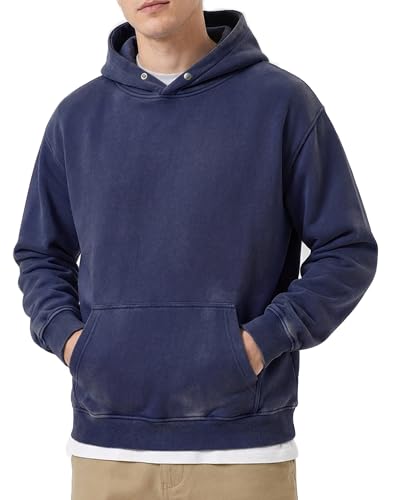
How the wash changes the cloth surface
Acid wash is a bleaching process done after the fleece cotton is knitted and made into cloth. The bleach takes pigment away unevenly. That leaves a mottled surface with lighter patches next to deeper areas. Because the wash hits each yard of cloth in its own way, no two hoodies come out with identical markings. The photograph on the product page shows one finished hoodie from the run. The hoodie in your hands will have lighter and darker areas in different spots. That variation belongs to the process. It is the intended result of the wash rather than a flaw in the fleece.
The dropped shoulder and the wide cut
We cut these hoodies with a dropped shoulder seam and a wider chest. The seam sits past the natural bone of the shoulder. The body has extra room through the ribs and down to the hem ribbing. When someone buys a standard sweatshirt, they often size up to get more room. Doing that here puts extra cloth past what was already drafted into the pattern. The shoulder seam moves further down the arm, and the sleeve gathers more cloth above the wrist cuff. The chest pattern already holds the extra ease. Keep your regular size if you want the relaxed line we drew.
How heavy cotton fleece handles wear
The outside of the hoodie shows the washed jersey face. The inside holds the looped fleece, which is brushed for loft. Heavy cotton has weight to it, so the cloth falls straight from the shoulder rather than clinging. Over regular wear, the brushed fleece inside packs down slightly under friction and washing. The cotton relaxes where the body bends it, mostly at the elbows and across the pouch pocket. Cotton breathes well through cool mornings, but thick fleece also holds its structure when you put a light jacket or an unlined coat over it without collapsing at the neck.
Washing cold and protecting the hood
Heavy fleece cotton needs straightforward care to keep its shape. Turn the hoodie inside out before it goes into the machine. This keeps the outer washed face from rubbing directly against the drum or other garments. Wash in cold water on a gentle cycle. A hot wash weakens the cotton fibers and strips more of the remaining finish. Use mild soap without bleach additives. Keep the drawstrings tied loosely in a bow so they do not pull through the channel in the hood during the spin cycle. Fasten any zippers on other clothes in the same load.
Drying flat away from high heat
High heat in a dryer shrinks heavy cotton quickly and warps the construction around the neck. The thickest part of the garment is the double-layered hood. When a hot dryer hits that hood, the outer layer and inner lining shrink at uneven rates. That causes the edge of the hood to curl and stiffen. Instead, lay the hoodie flat on a drying rack, or run the dryer on a low setting. Pull the hood out to its full shape with your hands while it is damp. Let the ribbed hem and cuffs dry naturally so the elasticity stays intact.
How the hoodie sits with tailoring
This hoodie is casual wear, not a tailored jacket. It belongs on off days when a suit stays in the closet. But a clean cotton fleece layer works well underneath an unlined coat or over a plain tee. We cut it with the same attention to seam balance that we bring to our blazers and trousers.