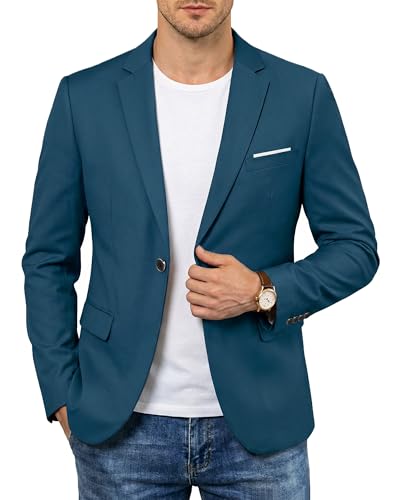
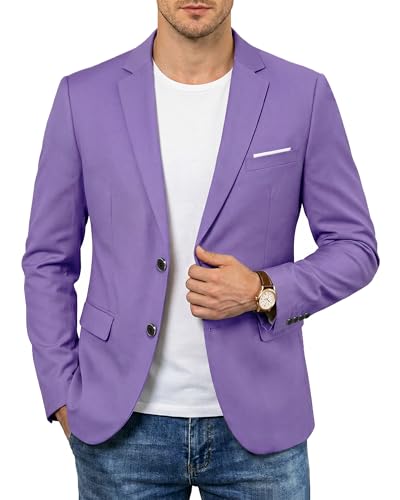
The step of the notch lapel
Thirty-eight of our jackets carry a notch lapel. A notch has a clear step cut into the cloth where the collar seam meets the lapel edge. It sits flat against the chest and keeps the front looking balanced. We cut this line for daytime work, business wear and morning events. It is a quiet shape that does not pull the eye away from the rest of the coat. You see it on our two piece suits and across our three piece sets where a waistcoat sits underneath. A broad wooden hanger keeps that pressed gorge line clean between wearings.
The upward line of the peak
Five of our jackets carry a peak lapel. This shape points up and out toward the shoulder line instead of cutting inward at a right angle. The upward edge widens the upper chest and leads the eye out toward the sleeve head. It is a formal cut that belongs at weddings, evening gatherings and public speaking. When cut in a polyester blend, the point stays sharp through long wear. We press the peak flat off the board so the cloth lies smooth against the canvas without curling forward. It gives a coat presence without extra cloth.
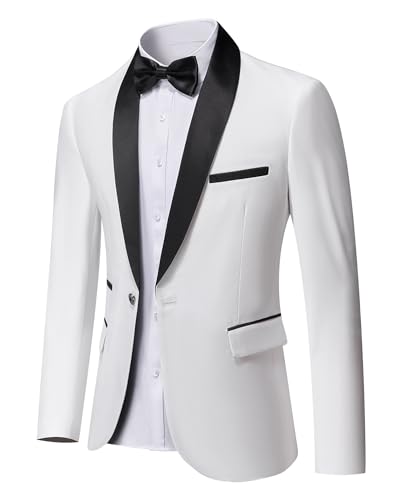
The unbroken curve of the shawl
Eighteen of our jackets carry a shawl collar. The shawl runs in one unbroken curve from the back of the neck down to the button stance, with no step and no corner at all. It belongs to evening wear, black tie gatherings and formal dinners. The curve softens the front edge of the jacket and exposes the shirt front evenly. We cut this line into our tuxedos and certain dinner coats. Because there is no seam notch to catch dust, it brushes clean quickly with a garment brush after a long night.
The division on our blazer rail
On our blazer rail, nine jackets carry a notch lapel and eight carry a shawl collar. This single cutting choice decides whether a blazer reads as a day coat or a dinner coat. A notch blazer pairs with separate trousers for afternoon meetings or travel. A shawl blazer shifts the piece into formal rooms and evening parties. The underlying cloth might be a polyester blend or a linen blend, but the neck edge sets the tone. Choosing between those two cuts determines how you use the blazer through the week.
Garments cut without any lapel line
Seventeen garments in our catalogue have no lapel to read at all. These include our two piece dashiki sets and our standalone trousers. A dashiki set relies on a clean neck opening, letting the cloth drape straight down the chest without folding back. Trousers hang from the waistband down to the cuff without any lapel detail above them. When a garment has no lapel, you care for the front by steaming out transit creases and letting the fabric settle on a wide hanger overnight.
Caring for your jacket collar line
Hang your jacket on a shaped wooden hanger so the collar keeps its roll. Steam the lapel cloth from behind rather than pressing an iron directly onto the face. That keeps the edge crisp, protects the polyester or linen blend fibres, and lets the front lie flat.